White Winter
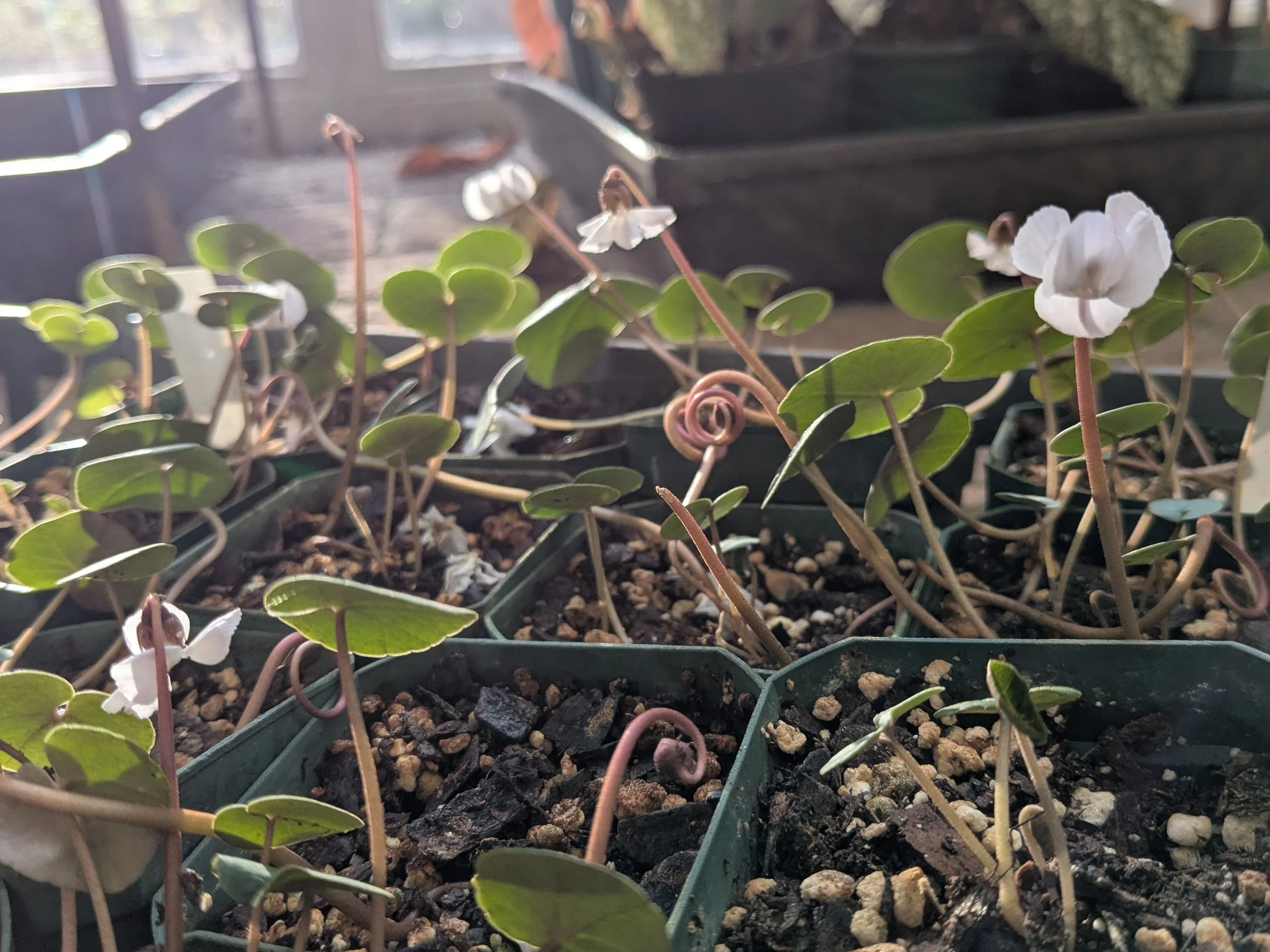
We spend the month of January searching for gems in the garden. Adonis amurensis shines among dull stones in the rock garden. Crocus tommasinianus appear in clumps in garden beds, lawns, and paths. Straw-yellow Narcissus romieuxii nod gracefully in the rock garden and in the woods. But the flowers we search out most carefully this month are the varied forms of Cyclamen coum.
The leaves of C. coum emerge in early autumn and range from glossy, hunter green to pure, bright silver. The flowers open in the middle of winter. These sturdy plants weather snow, ice, and bitter cold without damage. On days with heavy frost, their leaves and flowers droop to the ground, but they come back to themselves as the temperature rises. Our collection includes pure-white flowering plants, crimson-flowered jewels, subspecies from Russia with dark flowers and heart-shaped leaves, wild-collected, seed-grown plants from Turkey, and selected strains with marked leaves from the gardens of famed cyclamen grower, Roger Poulet. Where our plantings have naturalized, new intermediate forms have come up from seed. We walk slowly through the woods, stopping often to observe subtle variations in color and form, selecting our favorites to pollinate gently with a small paintbrush. If pollination is successful, the seeds will ripen in the middle of spring.
However, pollination in the garden occurs as frequently via natural intermediaries as through our attentions with the paintbrush. The preferences of the non-human pollinators do not seem to be the same as ours. So, where we carefully located pure-white blooming C. coum, hand-pollinated them, collected their seeds, sowed the seeds and tended the seedlings for two years, we should not have been surprised by the young plants' first showing of beautiful, magenta blooms. Several years ago, we began guarding a few of our pure-white plants in the greenhouse to attempt pollination away from interlopers. Now we have stabilized this strain of Cyclamen coum f. albissimum, and look forward to adding more of them to our garden and offering them for sale in the nursery.